Showing posts with label art. Show all posts

Thursday, 28 January 2010

Grace


Hugh McLeod, the cartoonist who drew "Love Begets Love" just sent me a wonderful quote about Jeff Buckley.

I remember the late, great Jeff Buckley describing "Grace" as "the idea of your own mortality not being that bad, once you've found True Love."

I thought that was worth passing on.

Hugh sells prints of his cartoons from his website at http://www.gapingvoid.com Pay him a visit and spend a little money.

Monday, 10 August 2009

Nowt so Queer as Folk

A work of art (allegedly) photographed in King's Cross.

I've been wondering what 'fake hookers' are. Do they have sex with you, then pretend to take money? Or do they take your money, and then pretend to have sex? (I thought that was what real hookers did.)

People in London make their lives very complicated.

King's Cross was, and probably still is, one of the railway termini where young men and women would arrive from the North looking for glamour, wealth and fame. A lot of them would be recruited into being prostitutes and rent boys. The manager of Tottenham Hotspur was arrested kerb crawling for hookers at King's Cross. So was one of Brother Beyond.


Two months after this record came out, there was a huge fire at King's Cross tube station. About 30 people died. It was quite eerie listening to the song after that. The film is by Derek Jarman.

The man at the back of the queue was sent
To feel the smack of firm government
Linger by the flyposter, for a fight
It's the same story every night
I've been hurt and we've been had
You leave home, and you don't go back

Someone told me Monday, someone told me Saturday
Wait until tomorrow and there's still no way
Read it in a book or write it in a letter
Wake up in the morning and there's still no guarantee

Only last night I found myself lost
By the station called King's Cross
Dead and wounded on either side
You know it's only a matter of time
I've been good and I've been bad
I've been guilty of hanging around

Someone told me Monday, someone told me Saturday
Wait until tomorrow and there's still no way
Read it in a book or write it in a letter
Wake up in the morning and there's still no guarantee

So I went looking out today
For the one who got away
Murder walking round the block
Ending up in King's Cross
Good luck, bad luck waiting in a line
It takes more than the matter of time

Someone told me Monday, someone told me Saturday
Wait until tomorrow and there's still no way
Read it in a book or write it in a letter
Wake up in the morning and there's still no guarantee

Someone told me Monday, someone told me Saturday
Wait until tomorrow and there's still no way
Read it in a book or write it in a letter
Wake up in the morning and there's still no guarantee
And there's still no guarantee
There is still no guarantee
Words and Music by NEIL TENNANT and CHRIS LOWE

Saturday, 25 April 2009

Song From Under the Floorboards


I saw my friend Amy the other day.
Amy is good with naked women.
We talked about Dostoevsky.

Amy is an artist, but she had never shown me her portfolio before. She is very good at life drawing, and has a real eye for the female form. She had several nude studies on her iPhone, and even on the small screen, the curves of her figures were beautiful and involving.

By coincidence, Amy mentioned that she wanted to read some Dostoevsky, the Russian author I alluded to the other day. I mentioned this book, and the song that Howard Devoto made of it. Devoto restored the original Russian word the translator rendered less poetically; the anonymous narrator addresses the reader from between the floorboards of his apartment.

I am angry, I am ill and I'm as ugly as sin
My irritability keeps me alive and kicking
I know the meaning of life, it doesn't help me a bit
I know beauty and I know a good thing when I see it

1982 was a year when I was not good with naked women, and everything in my life felt crooked, rather than curved. "A Song from Under the Floorboards" was an existential crisis you could dance to, with an insistent opening riff that moved harmonically and went nowhere melodically. I was angry, and I felt ill and I felt ugly. These last few months, I have felt it all over again.

This is a song from under the floorboards
This is a song from where the wall is cracked
By force of habit, I am an insect
I have to confess
I'm proud as hell of that fact.

I know the highest and the best
I accord them all due respect
But the brightest jewel inside of me
Glows with pleasure at my own stupidity.

This is a song from under the floorboards ....

I was never stupid at school. Stubborn, yes; lazy, distracted... and afraid to speak out. But I did not manage to be stupid. (Yes, dear reader, I knew too much.) And I knew a good thing when I saw it.
I knew beauty, but it was not the involving kind.

I used to make phantoms I could later chase
Images of all that could be desired
Then I got tired of counting all of these blessings
And then I just got tired

This is a song from under the floorboards ...
MAGAZINE

Wednesday, 28 January 2009

Straight Talk, No Chaser

His talent was as natural as the pattern
that was made by the dust on a butterfly's wings.
At one time he understood it
no more than the butterfly did
and he did not know when it was brushed or marred.

Later he became conscious
of his damaged wings and their construction
and he learned to think and could not fly any more
because the love of flight was gone
and he could only remember
when it had been effortless.
(Hemingway, on Fitzgerald)

F. Scott Fitzgerald was a self-destructive alcoholic who was dead at forty-four. He also wrote some of the most wonderful novels and short stories I have ever read. That's why I cherish his memory, and seek to follow this piece of advice when it comes to my own talent.

Sunday, 18 January 2009

Tony Hart, 1925 - 2009


Tony Hart was a wonderful man who got millions of children interested in drawing and deserves to spend infinity in paradise, if anybody does.

Stop Press! Bonus! The BBC posted this link to Tony Hart's gallery music: Left Bank Two, by the Noveltones.

Wednesday, 17 December 2008

The Discos of Christmas Past - No 3


1984

was one of the great Christmas party seasons. I spent much of it getting obliterated in a strange pub / club / Italian restaurant / knocking shop called Nonno's in Preston, an appropriately nihilistic name.

The original "Do They Know It's Christmas?" was number one (factual answer: Ethiopia is the second oldest Christian state in the world, after Armenia, so yes, I think they probably do) and elsewhere in the Top Ten Prince was threatening to party like it was 1999, Strawberry Switchblade were ripping off one of Sibelius' best riffs, and a (still heterosexual) George Michael was trilling

"Last Christmas,
I gave you my heart
And the very next day
You went off with that tart..."

But this was the tune that made me want to
  • go out and buy a sampler,
  • study Kandinsky and the Italian futurists,
  • forgive Paul Morley his unreadable NME articles, and
  • dance like a drunken idiot.


Close To The Edit
ART OF NOISE

It has one of my favourite basslines ever, naked men by the legendary Victorian photographer Eadweard Muybridge, and some line drawings that look like an influence on the young Homo Escapeons.

Tuesday, 7 October 2008

Crocheted Coral Reef


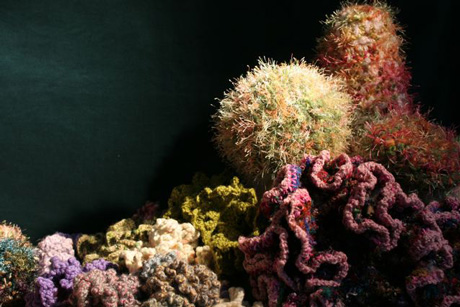
This is what I found when I was Googling for references to "The Great Wen". (I know, my dears, teh interwebs is a random place, and I should not be let near it.)

The mad lady scientists at the Institute for Figuring have crocheted this beautiful hyperbolic coral reef. Crochet advances our understanding of mathematics, and the nature of space. And it's pretty.

Tuesday, 9 September 2008

A Pale Blue Dot


Consider again that dot. That's here. That's home. That's us. On it everyone you love, everyone you know, everyone you ever heard of, every human being who ever was, lived out their lives. The aggregate of our joy and suffering, thousands of confident religions, ideologies, and economic doctrines, every hunter and forager, every hero and coward, every creator and destroyer of civilization, every king and peasant, every young couple in love, every mother and father, hopeful child, inventor and explorer, every teacher of morals, every corrupt politician, every "superstar," every "supreme leader", every saint and sinner in the history of our species lived there – on a mote of dust suspended in a sunbeam.

The Earth is a very small stage in a vast cosmic arena. Think of the rivers of blood spilled by all those generals and emperors so that, in glory and triumph, they could become the momentary masters of a fraction of a dot. Think of the endless cruelties visited by the inhabitants of one corner of this pixel on the scarcely distinguishable inhabitants of some other corner, how frequent their misunderstandings, how eager they are to kill one another, how fervent their hatreds.

Our posturings, our imagined self-importance, the delusion that we have some privileged position in the Universe, are challenged by this point of pale light. Our planet is a lonely speck in the great enveloping cosmic dark. In our obscurity, in all this vastness, there is no hint that help will come from elsewhere to save us from ourselves.

The Earth is the only world known so far to harbor life. There is nowhere else, at least in the near future, to which our species could migrate. Visit, yes. Settle, not yet. Like it or not, for the moment the Earth is where we make our stand.

It has been said that astronomy is a humbling and character-building experience. There is perhaps no better demonstration of the folly of human conceits than this distant image of our tiny world. To me, it underscores our responsibility to deal more kindly with one another, and to preserve and cherish the pale blue dot, the only home we've ever known.

Carl Sagan

A Small Blue Thing

Today I am
A small blue thing
Like a marble
Or an eye

With my knees against my mouth
I am perfectly round
I am watching you

I am cold against your skin
You are perfectly reflected
I am lost inside your pocket
I am lost against your fingers

I am falling down the stairs
I am skipping on the sidewalk
I am thrown against the sky
I am raining down in pieces
I am scattered like light
Scattering like light

Today I am
A small blue thing
Made of china
Made of glass

I am cool and smooth and curious
I never blink
I am turning in your hand
Turning in your hand

A small blue thing...

Suzanne Vega

Thursday, 28 August 2008

Glowing Green Bunnies! Glowing Green Bunnies!

This is Alba, an albino rabbit who looks normal in normal light, but glows phosphorescent green in the dark. She is the subject of the brilliantly titled chapter I wanted to read in that book about Queering the Non-Human (education is such fun!)

Alba

Alba was designed by Eduardo Kac, a Brazilian artist, and Louis-Marie Houdebine, a French geneticist. The rabbit's DNA was modified by the fluorescent protein EGP, a synthetic variant of a naturally existing gene from the jellyfish Aquaria Victoria, which was introduced through zygote micro-injection.

Apparently, Alba's "rabbit remix" was part of Kac's investigations into Telepresence & Bio Art, and she is supposed to entail some kind of statement about hybrids and creativity and integrating into society. I'm not so sure about it, especially since I read that the scientists involved fell out with the artist and claim that the publicity pictures of Alba were Photoshopped to make her green glow look stronger than it actually was.

Two Disapproving Rabbits

I realise that the queer sensibility tries to "ungird" and de-stabilize our sense of what is and isn't "natural". But I also thought that identity politics was about not letting other people define our identities for us? Genetically manipulating an animal, and then manipulating the photographs of said creature, doesn't really symbolize liberation and diversity to me.


God, as I understand Her to be

Hieronymous Bosch Action Figures


I've just discovered that the National Gallery in London is selling Hieronymous Bosch action figures. Can you think of anything more utterly cool than that?


Collect them. Play with them. Share them with your friends.

Re-enact your favourite monstrous mediaeval scenes of sin, wickedness, and folly! Preside over the Last Judgment, and witness the torments of the damned in Hell!

My life wasn't complete without this.

Tuesday, 5 August 2008

Smile Like You Mean It

What do you say when someone points a camera at you?
Do you say "cheese?"

This is Norman Parkinson, the famous fashion photographer. He didn`t like people saying "cheese" when he was taking their picture. He used to ask them to say
"lesbians"
I don't know why, but he's the genius, not me. He won all the awards, he did lots of Vogue covers, and Pirelli calendars, and advertising for the Conversative Party (don't ask, don't tell). So let's see how that works in practice, shall we? You can join in at home, if you have a camera.

If you think this is a reference
to the Blues Brothers,
you really need to get Sky.


Here is a picture of a young Audrey Hepburn,
saying "lesbians" to a pony.

As is often the case in these pictures,
the pony really doesn't seem motivated.


This couple are running towards the camera,saying "lesbians" out loud. How happy they look!


A two girl scene from Swinging London, 1963.
It's not just the paint that's wet...


Here is David Bowie, in a portrait by Parkinson.
Is he saying "lesbians" under his breath? Or is he far too cool?
Or is he just completely off his tits on coke?


Jerry Hall saying "lesbians" under a monument to David Niven, the father of Russian communism.


Her Majesty the Queen and the Duke of Edinburgh. What lovely smiles they both have. But it would be improper to ask.

"The life of a world famous fashion photographer would appeal to many. But Norman Parkinson knew that without sausages, it was all meaningless.''


Wednesday, 30 July 2008

A Close Watch On The Trains

My parents' generation remembered The War. They still call it "The War" even though there have been a few more wars since. My Nana, when she was alive, said there was another war, before "The War", that she thought was even worse.

Anyway. I grew up in peacetime. I was very relieved that I wasn't going to have to join the army, unless I wanted to. I was, however, worried, that compared to my father, I was growing up soft. My father worried about this, too. (Let's be honest. I learned to worry from him. But because I was a child, I thought it was all my own idea, and, of course, all my fault. )


When I was a boy, I liked trains. Then later on, I liked girls. In my teens, I liked both together, and - things being the way they were - I especially liked the older, better looking ones that I couldn't catch. (The trains, that is. And the girls.)

Eventually, I went to university, where I fell in love with a woman who was older and madder and interesting and Eastern European and politically active. (And a self-harmer. Pity about that. ) So, I got to see lots of interesting films from the Soviet Union and Eastern Europe (and plenty of dull ones, too. Pity about that.)


Jiri Menzel's Ostre sledované vlaky was one of my favourites. It was made in Czechoslovakia during the mid-sixties period they called the Prague Spring, when people were confident and artistic, and reflective and critical about society and the possibilities for the world, in a positive way, until the Russian tanks arrived, and they all had to wait another twenty years before Václav Havel became President and met Lou Reed and Frank Zappa.

It's a film about trains and The War - I don't know what my father would have made of it - and a young man trying to lose his virginity.


Milos, the teenage protagonist, is an apprentice at a small railway station in provincial Bohemia, and the trains he is supposed to watch often contain Nazi troops and equipment being sent to the Eastern Front. The Nazis are, of course, the enemy, an occupying army, and in the film we follow young Milos as he learns, in different ways, what he has to do to be a man: how to survive under Nazi occupation, how he can resist it, how to be courageous and heroic, how men behave around women, and how to get the girl he wants.


Milos watches an older colleague as he flirts with and seduces a girl, and thinks he knows what sex is all about. But his dirty weekend with a beautiful train conductor doesn't go to plan, and in despair, Milos tries to kill himself. I can never forget the scene in the hospital, where Milos shows his bandaged slashed wrist to a visitor and says, with a straight face :
"The doctors say it's called premature ejaculation."
A Close Watch On The Trains is a comedy about being a man, being a hero, and being good enough. Milos' sexual awakening goes hand in hand with his political development.

Appropriately enough for a film set in Bohemia, orgasms are an act of freedom and defiance. Orgasms will defeat fascism, if we have enough of them.

We can imagine that Menzel's tale of resistance to the Nazis was also meant to encourage 1960's Czechs and Slovaks not to stand for any crap from Moscow. Certainly, the Russians banned the film after they invaded provided fraternal assistance in 1968.


My father was right about me being soft, compared to him. But his mother died when he was five, and he was raised by an alcoholic father for a few years, before he died, and left his sons to be raised by someone even more brutal. So my dad didn't have a lot of opportunities for softness in his life.

He made the most of the opportunities he had with me when I was little, but the older I grew, the more talkative and curious and energetic I became, the less he knew what to do. I guess my dad's life forced him to toughen up a lot sooner than he would have liked, and we both lost something on account of that.

Monday, 28 July 2008

A Close Watch

(A Close Watch on the Trains)


Never win and never lose
There’s nothing much to choose
Between the right and wrong.

Nothing lost and nothing gained
Still things aren’t quite the same
Between you and me.

I keep a close watch on this heart of mine


I still hear your voice at night
When I turn out the light
And try to settle down.

But there’s nothing much I can do
Because I can’t live without you
Any way at all.


I keep a close watch on this heart of mine
JOHN CALE


John Cale took the words "I keep a close watch on this heart of mine" from I Walk The Line by Johnny Cash.

Sunday, 13 July 2008

The House In Sandy Gate Lane Pt. 2


I had a comment on yesterday's post (from the far from unobservant Z), because I described our house as modern, when it was built in the 1930's. This is worth exploring a little further.

The first house I lived in, Summer Hill, was built for my father on a plot of land he owned, in the 1950's. The second house, the curiously named Cobber's Hill probably dated fromthe mid sixties. So here I am, at thirteen, moving into a house that is older than either of the other homes i've lived in, and yet I call it 'modern'. What's that all about?

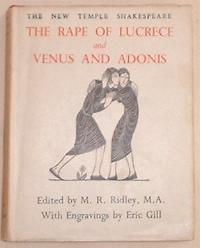
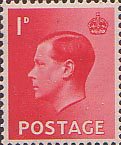
I used to collect stamps, and for some reason, I was particularly fascinated by a range of stamp called the King Edward VIII Definitives. Perhaps it was because they were rare and collectable - the King was only on the throne for eleven months - but I was also fascinated by the elegance of their design. They were designed by a man called Eric Gill. I also had a set of books called the New Temple Shakespeare, which was a pocket edition, with a separate book for each of the plays, the same size as Beatrix Potter's Peter books. Every book had an engraving by Eric Gill on the dust jacket, and more engravings inside, to illustrate the plays.

At some point, I matched the name of Eric Gill in Stanley Stamp's Gibbon Catalogue to the name on my Shakespeare books, and was interested enough to look him up in an encyclopedia one day in the local reference library. That, gentle reader, is how I became fascinated by the art and design of the 1930's, and also began to get a wee bit pretentious, and use the word 'modern' in a different context, besides just meaning the most up-to-date.


I was too young to be interested Shakespeare at that age. My parents had just decided to leave a set of his plays in my bedroom, like Desert Island Discs, in the hope that somehow I would find them, and start to become cultured and intelligent.

They did this with another book, too. A sex education manual. That one, I did read, and not just study the pictures. Since it was a book for parents, not children, it wasn't entirely informative. But I did learn that parents can be very confused and embarrassed about sex, and I resolved not to trouble mine any further.

I remember soaking stamps off envelopes in the washbasin in the downstairs bathroom in the house in Sandygate Lane. It was an avocado bathroom, which had apparently very fashionable at some point. My parents had gone out for the evening, and I cleaned up the basin and put the stamps somewhere to dry out, and I sat down to watch - heaven only knows how I come to remember this - The Thomas Crown Affair, which was being repeated on television that night.

It was the Steve McQueen original, not the Pierce Brosnan remake. I remember being quite interested in Faye Dunaway, and fascinated by the split screen photography, but mostly, it was the song about the windmills that stayed with me.

(I know I'm still avoiding writing about Wimbledon, and my raging fever, and the pond at the bottom of the garden. Bear with me, I'll get around to it.)

Tuesday, 8 July 2008

Brain Damage


For the lovely I'LTV

According to some people with far too much time on their hands and access to a well-stocked pharmacy cabinet, the Floyd wrote Dark Side of the Moon as a soundtrack to Wizard of Oz. To get the effect, you have to cue up the CD, load up the bong, and press [PLAY] when the MGM lion roars for the third time.

Here are Dorothy and the Tin Man singing "If I only had a brain", which synchronises with "Brain Damage".


Stuck inside these four walls,
Sent inside forever,
Never seeing no one nice again
Like you, Mama, like you.

If I ever get out of here,
Going to give it all away
To a registered charity.
All I need is a pint a day
If I ever get out of here.

Well, the rain exploded with a mighty crash
As we fell into the sun,
And the first one said to the second one there
I hope you're having fun.
Band on the run, band on the run.
And the jailer man and Sailor Sam
Were searching every one
For the band on the run
Band on the run
Band on the run
Band on the run


WINGS
"The band The Beatles could have been"

Sunday, 27 April 2008

Drugs Are Bad


Okay, I'm convinced. Drugs really are bad for you.

I blame Mrs. Thatcher. When the hippies and the anarchists and the musicians were running the drug trade, they would never let you get like this. The profit motive has spoiled it for everyone.

If you don't believe me, take a look at Keith Richards of the Rolling Stones, the world's most elegantly wasted human being.

He's sixty-four years old, and he looks a lot better than your grandpa, doesn't he? And he gets to hang out with cool guys like Johnny Depp, climb trees, advertise Louis Vuitton, and still gets on with his day job.


So, if you want to take drugs, make sure you have a lot of money, a good doctor, and a good lawyer. And some really nice friends.

If you get into drugs because you're unhappy, messed up in the head, want to escape, or even worse, want to be popular, they won't help you. They'll just make you worse.


Here's two videos of Amy Winehouse from a few years back, when she was talented, curvy, and damned hot. I feel deprived.

Friday, 18 April 2008

Thursday, 17 April 2008

The Poet and His Muse


This morning's papers announced the death last week of Joan Jackson, age 92. Mrs Jackson, born Miss Joan Hunter Dunn, was the inspiration for John Betjeman's poem "A Sub Altern's Love Song". The two worked together at the Ministry of Information during World War II.

In the poem, written in 1940, a young army officer comes home on leave from his miltary service, plays tennis with Miss Dunn, and admires her sun-burnished form on court. Subsequently, he takes her to a dance, and the poem ends when he proposes to her and they become engaged.

Around the time he wrote this poem, Betjeman had told his friends that he had fallen in love with a red-headed woman. Was it she? Mrs Jackson said that Betjeman was a very nice gentleman; he helped her and her sons after she was widowed. But the poem was a fantasy, and whatever may have felt, he never made a pass at her.

A Subaltern's Love Song


Miss J. Hunter Dunn, Miss J. Hunter Dunn,
Furnish'd and burnish'd by Aldershot sun,
What strenuous singles we played after tea,
We in the tournament - you against me!

Love-thirty, love-forty, oh! weakness of joy,
The speed of a swallow, the grace of a boy,
With carefullest carelessness, gaily you won,
I am weak from your loveliness, Joan Hunter Dunn.

Miss Joan Hunter Dunn, Miss Joan Hunter Dunn,
How mad I am, sad I am, glad that you won,
The warm-handled racket is back in its press,
But my shock-headed victor, she loves me no less.

Her father's euonymus shines as we walk,
And swing past the summer-house, buried in talk,
And cool the verandah that welcomes us in
To the six-o'clock news and a lime-juice and gin.

The scent of the conifers, sound of the bath,
The view from my bedroom of moss-dappled path,
As I struggle with double-end evening tie,
For we dance at the Golf Club, my victor and I.

On the floor of her bedroom lie blazer and shorts,
And the cream-coloured walls are be-trophied with sports,
And westering, questioning settles the sun,
On your low-leaded window, Miss Joan Hunter Dunn.

The Hillman is waiting, the light's in the hall,
The pictures of Egypt are bright on the wall,
My sweet, I am standing beside the oak stair
And there on the landing's the light on your hair.

By roads "not adopted", by woodlanded ways,
She drove to the club in the late summer haze,
Into nine-o'clock Camberley, heavy with bells
And mushroomy, pine-woody, evergreen smells.

Miss Joan Hunter Dunn, Miss Joan Hunter Dunn,
I can hear from the car park the dance has begun,
Oh! Surrey twilight! importunate band!
Oh! strongly adorable tennis-girl's hand!

Around us are Rovers and Austins afar,
Above us the intimate roof of the car,
And here on my right is the girl of my choice,
With the tilt of her nose and the chime of her voice.

And the scent of her wrap, and the words never said,
And the ominous, ominous dancing ahead.
We sat in the car park till twenty to one
And now I'm engaged to Miss Joan Hunter Dunn.

-- John Betjeman