Showing posts with label science. Show all posts

Sunday, 15 February 2009

Random and Meaningful


It was the 200th anniversary of Charles Darwin's birth on Thursday, and I was pleased to see that the Roman Catholic Church had some positive things to say, about how a biological theory of evolution complemented the Christian view of creation.

I've felt for a long time that evolution didn't take away belief in God, just one of the traditional reasons for believing: the idea that nothing as complex as the world we live in could possibly have come into existence unless there were a single powerful being to create it.

The debate I'd like to hear is not between a Christian and an atheist, but between two Christians, one of whom believes in 'creationism' and one of whom believes in God and empirical science. There's no shortage of the latter.

I get annoyed when people argue that belief in evolution requires us to believe that life has no meaning, and that everything is random. It isn't so. Randomness is only a part of evolution. It's the part that says we are all different, all shapes and sizes, and nature is wonderful in its variety.


Evolution talks about the natural selection of random variations; the idea that some variations die out, but many of them survive, and over a very, very, long time indeed, evolution created flowers and dolphins and spiders and asparagus, and people like you and me.

If you are left-handed, or have red hair, or darker skin, or you have epilepsy, it doesn't mean you belong to the Devil; it doesn't mean your family has been punished by God. I am much happier to believe that the variety in human beings exists because of random variation, rather than giving it a symbolic meaning.

Which brings me to my own family, and one of my aunts, who is a devout Christian, and quite unable to accept variety, even in her own family.

Last year, two of my cousins were diagnosed with bipolar disorder, also called manic depression. About one percent of the population are bipolar to some degree, and the condition is often associated with high intelligence and creativity.

I learned from Stephen Fry's excellent documentary "The Secret Life of the Manic Depressive" (available on YouTube) that people who live with this condition, asked if they would like to have it taken away from them, often say that they would hate to lose the positive experiences they get from being bipolar, even though they need help with the negative aspects.

This is not my aunt's point of view.

I am sorry to say that she is ashamed of her sons, and considers them a great disappointment to her. When my mother heard about this, she wrote her sister-in-law a very strong letter, and I don't think they are speaking any more.

I feel sad, and it has taken me a while to recognise that I feel angry. I haven't seen my cousins for ten years or so, but I shall certainly seek them out and make contact with them now. I'm not sure how I will respond to my aunt.

Saturday, 29 November 2008

Could Female Orgasms Kill Men?


Apparently, there's a good chance they would.. Thanks to Science and Supermodels for this advice, which is another good reason to put your partner's pleasure first, chaps.


"If theta waves are taken as a criterion, the entire brain emits theta waves when women reach an orgasm that are close to 10 times stronger than when men climax. So, if theta waves are an indication of an orgasm's strength, then women experience an orgasm that is physically impossible for men to go through.

Putting it a little crudely, if the intensity of a woman's orgasm was played through a man's brain, there's a danger that the shock to his system would kill him. That risk makes it impossible to experiment on a man at the moment. And men can never become women."

Dr. Kunio Kitamura
Head of the Japan Family Planning Association

Tuesday, 7 October 2008

Crocheted Coral Reef


This is what I found when I was Googling for references to "The Great Wen". (I know, my dears, teh interwebs is a random place, and I should not be let near it.)

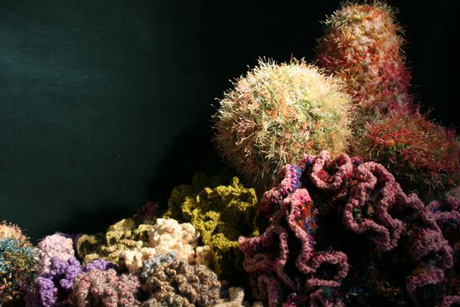
The mad lady scientists at the Institute for Figuring have crocheted this beautiful hyperbolic coral reef. Crochet advances our understanding of mathematics, and the nature of space. And it's pretty.

Tuesday, 9 September 2008

A Pale Blue Dot


Consider again that dot. That's here. That's home. That's us. On it everyone you love, everyone you know, everyone you ever heard of, every human being who ever was, lived out their lives. The aggregate of our joy and suffering, thousands of confident religions, ideologies, and economic doctrines, every hunter and forager, every hero and coward, every creator and destroyer of civilization, every king and peasant, every young couple in love, every mother and father, hopeful child, inventor and explorer, every teacher of morals, every corrupt politician, every "superstar," every "supreme leader", every saint and sinner in the history of our species lived there – on a mote of dust suspended in a sunbeam.

The Earth is a very small stage in a vast cosmic arena. Think of the rivers of blood spilled by all those generals and emperors so that, in glory and triumph, they could become the momentary masters of a fraction of a dot. Think of the endless cruelties visited by the inhabitants of one corner of this pixel on the scarcely distinguishable inhabitants of some other corner, how frequent their misunderstandings, how eager they are to kill one another, how fervent their hatreds.

Our posturings, our imagined self-importance, the delusion that we have some privileged position in the Universe, are challenged by this point of pale light. Our planet is a lonely speck in the great enveloping cosmic dark. In our obscurity, in all this vastness, there is no hint that help will come from elsewhere to save us from ourselves.

The Earth is the only world known so far to harbor life. There is nowhere else, at least in the near future, to which our species could migrate. Visit, yes. Settle, not yet. Like it or not, for the moment the Earth is where we make our stand.

It has been said that astronomy is a humbling and character-building experience. There is perhaps no better demonstration of the folly of human conceits than this distant image of our tiny world. To me, it underscores our responsibility to deal more kindly with one another, and to preserve and cherish the pale blue dot, the only home we've ever known.

Carl Sagan

A Small Blue Thing

Today I am
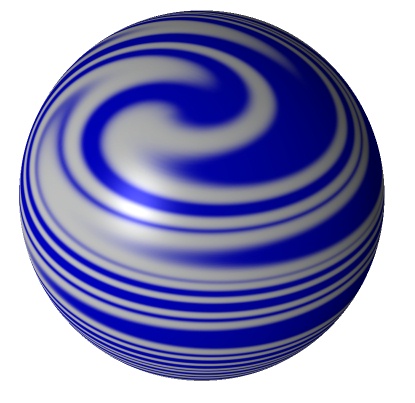
A small blue thing
Like a marble
Or an eye

With my knees against my mouth
I am perfectly round
I am watching you

I am cold against your skin
You are perfectly reflected
I am lost inside your pocket
I am lost against your fingers

I am falling down the stairs
I am skipping on the sidewalk
I am thrown against the sky
I am raining down in pieces
I am scattered like light
Scattering like light

Today I am
A small blue thing
Made of china
Made of glass

I am cool and smooth and curious
I never blink
I am turning in your hand
Turning in your hand

A small blue thing...

Suzanne Vega

Thursday, 28 August 2008

Glowing Green Bunnies! Glowing Green Bunnies!

This is Alba, an albino rabbit who looks normal in normal light, but glows phosphorescent green in the dark. She is the subject of the brilliantly titled chapter I wanted to read in that book about Queering the Non-Human (education is such fun!)

Alba

Alba was designed by Eduardo Kac, a Brazilian artist, and Louis-Marie Houdebine, a French geneticist. The rabbit's DNA was modified by the fluorescent protein EGP, a synthetic variant of a naturally existing gene from the jellyfish Aquaria Victoria, which was introduced through zygote micro-injection.

Apparently, Alba's "rabbit remix" was part of Kac's investigations into Telepresence & Bio Art, and she is supposed to entail some kind of statement about hybrids and creativity and integrating into society. I'm not so sure about it, especially since I read that the scientists involved fell out with the artist and claim that the publicity pictures of Alba were Photoshopped to make her green glow look stronger than it actually was.

Two Disapproving Rabbits

I realise that the queer sensibility tries to "ungird" and de-stabilize our sense of what is and isn't "natural". But I also thought that identity politics was about not letting other people define our identities for us? Genetically manipulating an animal, and then manipulating the photographs of said creature, doesn't really symbolize liberation and diversity to me.


God, as I understand Her to be

Tuesday, 26 August 2008

My Queer Studies


I hope you'll excuse me for deviating from my normal standards of trivia and frippery to discuss something that matters to me.


Some of you know, and some of you don't, that I've been working on a PhD thesis, and a fine old mad-making piece of merriment it has proved to be.


I've been researching Lloyd's of London: how the insurance industry negotiates contracts, and the difficulties of designing an electronic environment to negotiate in, instead of doing everything face to face in this fine, shiny building on the corner of Lime Street.

Over the weekend I discovered an important concept that explains something what I've been trying to explain. To my surprise, the insight comes from Queer Studies; specifically, it comes from the insights we get once we stop thinking about nature and culture as fundamentally separate, and look at meeting the universe halfway: how we perform the world into existence by the ways we study it, interpret it, and try to change it.

So there you have it: the application of Queer Theory to the insurance industry. For example, performing New Orleans into existence, again, after Hurricane Katrina. (That seems to be a very slow project.)

I shouldn't allow myself to get distracted, but there's another chapter in the same anthology called 'An Unfinished Conversation About Glowing Green Bunnies'. I mean, that's got to be worth a read, hasn't it?

Sunday, 4 May 2008

Happy Star Wars Day


May the Fourth be with you.

Sunday, 27 April 2008

Penis Thieves Cause Panic

There has been panic in Kinshasa this week, after a series of incidents in which sorcerers allegedly used magic to steal men's genitals.

Reports of so-called penis snatching are not uncommon in West Africa, where belief in traditional religions and witchcraft remains widespread, and where ritual killings to obtain blood or body parts still occur.

Rumours of penis theft spread quickly, and dominated radio call-in shows, with listeners advised to beware of fellow passengers in communal taxis wearing gold rings.

Kinshasa's police chief, Jean-Dieudonne Oleko, told Reuters:

"I'm tempted to say it's one huge joke. But when you try to tell the victims that their penises are still there, they tell you that it's become tiny or that they've become impotent.

"To that I tell them, 'How do you know if you haven't gone home and tried it?'"

Some Kinshasa residents accuse a separatist sect from nearby Bas-Congo province of being behind the witchcraft in revenge for a recent government crackdown on its members.

Now, obviously, a penis is a valuable item in many people's lives. When it's not being used to please a woman, a penis can also help a man go to the loo, write his name in snow, and provide a handy little ledge to rest his iPod on, on long plane journeys. So, since reading about the panic in the Congo, I have been careful not to leave my penis unattended in a public place.


On a more serious scientific note, though, I wonder if this is an example of the placebo effect? We know that doctors can make people feel better by giving them medicines that don't have any active ingredients. Maybe the sorcerers in the Congo have been able to persuade people that their penises have dropped off or withered away by using similar techniques?

Monday, 21 April 2008

Your Freedom is History

A very interesting report of some research from the Max Planck Institute for Human Cognitive and Brain Sciences in Leipzig, in collaboration with the Charité University Hospital and the Bernstein Center for Computational Neuroscience in Berlin.

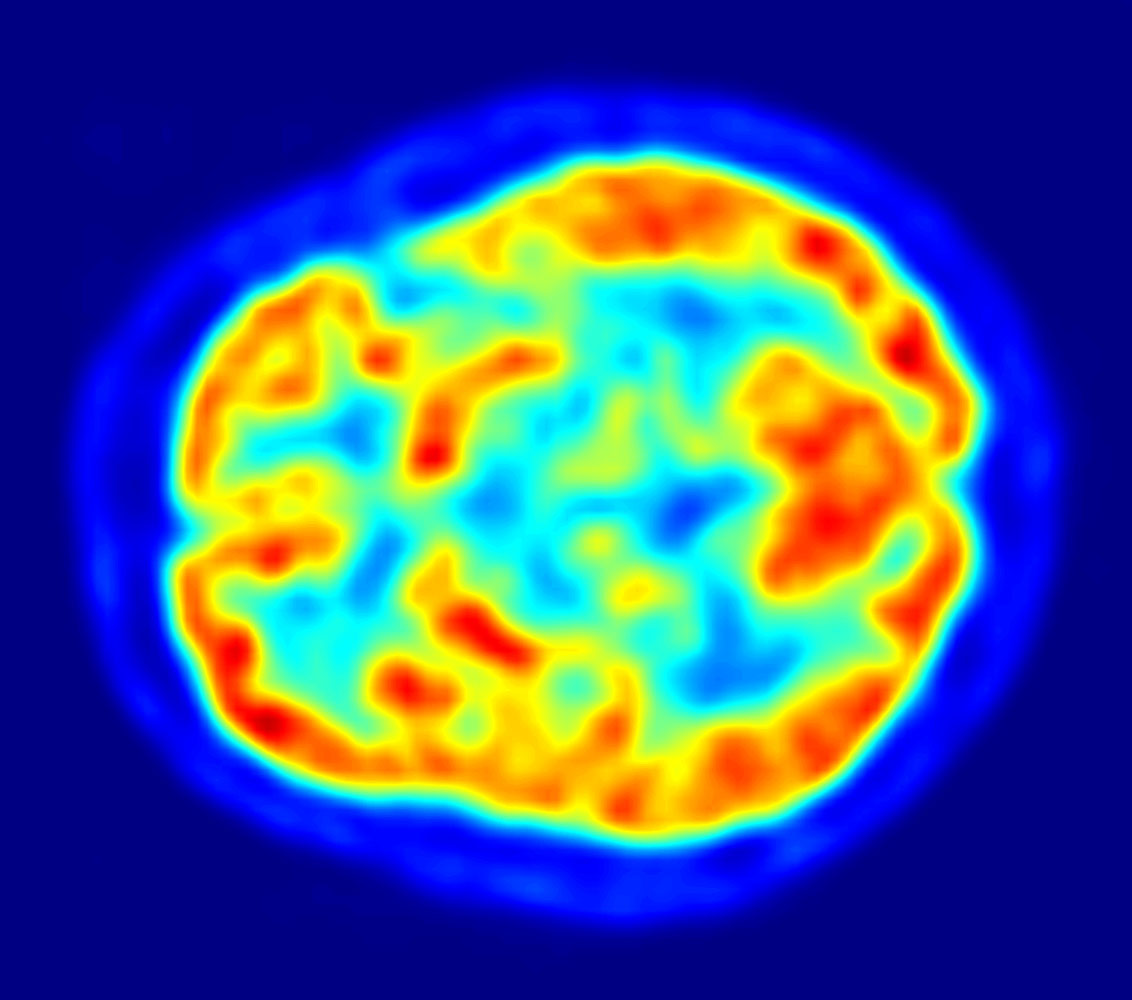
The researchers used a brain scanner to investigate what happens in the human brain just before a decision is made. Apparently, our brain makes a decision up to seven seconds before we become aware of it.

Participants in an experiment were asked to choose whether to push a button with their left hand or their right hand. They were allowed to decide well before they pushed the button, and were also asked to record at what point they felt they had made their decision.


In the seven seconds before Haynes' subjects chose to push a button, activity shifted in their frontopolar cortex (a brain region associated with high-level planning.) Soon afterwards, activity moved to the parietal cortex, a region of sensory integration.
Haynes' team monitored these shifting neural patterns using a functional MRI machine. Based on these brain patterns, the researchers were able consistently to predict which hand the subjects would use to push a button.

Taken together, the patterns consistently predicted whether test subjects eventually pushed a button with their left or right hand -- a choice that, to them, felt like the outcome of conscious deliberation.

So: does free will exist? I say, yes, it does. But our consciousness gets involved several seconds later. By the time we're aware of what we want to do, our brain and are body are already committed.